

Table of Contents
- Niche Fragrance vs Designer Scent Longevity: The Core Differences
- Perfume Concentration Guide: Why It Matters for Lasting Power
- Factors Affecting Fragrance Longevity: Ingredient Quality and Chemistry
- Sillage, Projection, and Scent Evolution
- How to Make Perfume Last Longer: Practical Strategies
- Niche Fragrance Longevity in Real Conditions
- Price, Performance, and Realistic Expectations
- Conclusion
Last Updated: August 12, 2026
Niche Fragrance vs Designer Scent Longevity: The Core Differences
The longevity question cuts to the heart of fragrance shopping. You're deciding whether you'll smell it at 3 PM or watch it fade by lunch. The real difference isn't niche versus designer as categories, it's concentration, formulation philosophy, and raw material quality. A high-end designer fragrance in Parfum concentration can outlast a poorly formulated niche scent in Eau de Toilette. Conversely, many niche fragrances are engineered for extreme longevity by design, which is often why they command premium prices. Roma Parfum, for instance, formulates at 40% oil concentration specifically to deliver scents that linger for 36 hours.
The confusion exists because fragrance industry categories (niche, designer, mass-market) don't directly correlate with performance. A niche fragrance is simply one produced in smaller quantities by independent or boutique houses. A designer fragrance comes from an established fashion or luxury brand. Neither label guarantees longevity. What does: concentration levels, fixatives, and the perfumer's commitment to building scent evolution.
Perfume Concentration Guide: Why It Matters for Lasting Power
Concentration is the single most important factor determining how long a fragrance lasts. It's the percentage of fragrance oils dissolved in alcohol and water. Higher concentration means more aromatic molecules on your skin, translating directly to longer wear time and stronger projection.
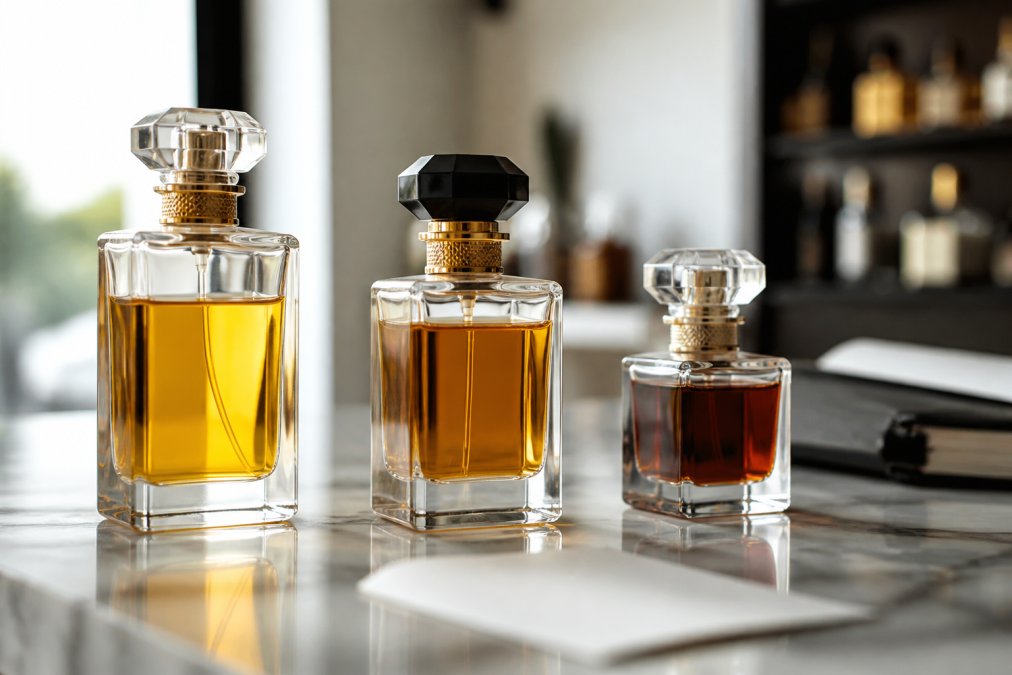
Eau de Toilette vs Eau de Parfum vs Extrait
Eau de Toilette (EDT) contains 5-15% fragrance concentration, designed for fresh, immediate impact. EDT typically lasts 3-5 hours on skin and is common in designer fragrances because lower concentration keeps production costs manageable.
Eau de Parfum (EDP) contains 15-20% fragrance concentration, providing substantial longevity of 6-8 hours with enough projection to be noticed without overwhelming. Many niche fragrances are formulated as EDP because the concentration supports complex scent evolution and justifies the higher raw material cost.
Extrait de Parfum (or Parfum) contains 20-40% fragrance concentration, delivering longevity of 8-12 hours or longer. Extrait is rare in designer fragrances because the cost is prohibitive at scale. Roma Parfum's formulations at 40% oil concentration sit at the absolute top of this range, explaining the 36-hour longevity claim.
The concentration difference is substantial. An EDT and an EDP of the same fragrance can smell entirely different by hour five because the EDP still has aromatic molecules present while the EDT has largely dissipated.
How Concentration Translates to Wear Time
The relationship between concentration and longevity isn't linear. An EDT at 10% concentration might deliver noticeable scent for 4 hours, while an EDP at 18% delivers closer to 8 hours because the higher concentration supports better fixative retention and slower diffusion rates.
If you're applying fragrance before work at 8 AM and want it present through a 5 PM meeting, you need at least EDP concentration, ideally 17% or higher. Designer fragrances often compensate for lower concentration with stronger top notes and aggressive sillage, projecting intensely for 2-3 hours then fading. Niche fragrances formulated as EDP or Extrait tend to project more moderately but sustain that presence for hours longer.
Skin chemistry affects this too. Someone with naturally oily skin will experience longer longevity from the same concentration than someone with dry skin, because the fragrance oils adhere better to the skin's lipid layer. But concentration still dominates the equation.
:::pro-tip If a fragrance is available in multiple concentrations, the EDP version usually offers the best value for longevity relative to cost. Extrait delivers extreme longevity but at a premium that only makes sense if you're specifically seeking 12+ hour wear time. :::
Factors Affecting Fragrance Longevity: Ingredient Quality and Chemistry
Concentration sets the ceiling, but ingredient quality determines whether you actually reach it. Two fragrances with identical 20% concentration can perform very differently based on what's actually in that 20%.
Raw Materials and Fixatives
Raw materials fall into two categories: natural extracts and synthetics. Natural materials like jasmine, sandalwood, rose, and oud tend to have superior longevity because they're complex molecules with multiple aromatic compounds. Synthetic molecules are often created to isolate specific aromatic characteristics. Iso E Super, for instance, is a synthetic that smells like woody amber and persists for 12+ hours.
Fixatives are the real longevity drivers. These materials, often heavy synthetics or natural resins like amber, musk, or oud, don't evaporate quickly. They anchor lighter aromatic molecules, slowing their diffusion. Base notes are 40-60% fixatives by weight. This structure creates scent evolution: bright, fresh top notes that fade into warmer, longer-lasting base notes.
Niche fragrances often use rarer or more expensive fixatives at higher concentrations, which costs more but delivers superior longevity. Designer fragrances sometimes use cheaper fixatives or lower concentrations of expensive ones, offset by higher concentration of volatile materials to create immediate impact.
Skin Chemistry Interaction
Your skin's pH, lipid content, and natural bacteria all affect how a fragrance performs. Acidic skin tends to break down fragrance molecules faster. Oily skin holds fragrance longer because the oils trap aromatic molecules. Pulse points, wrists, neck, and inner elbows are warmer, causing fragrance to diffuse faster but also project more. Applying fragrance to cooler areas like the chest extends longevity because lower temperature slows evaporation.
Individual skin microbiomes interact with fragrance chemistry too. Your natural skin scent either complements or clashes with fragrance molecules. This is why blind testing fragrance is essential before committing to a purchase.
Sillage, Projection, and Scent Evolution
Longevity and projection are different things, and this distinction matters enormously when comparing niche fragrance performance to designer offerings.
Sillage is the scent trail you leave. Projection is how far the fragrance extends from your skin. Longevity is how long it lasts on your skin, regardless of whether anyone else can smell it.
Designer fragrances often optimize for sillage and projection because those qualities feel luxurious in the first hour. But this comes at a cost: the fragrance burns through volatile materials quickly, and by hour four, it's a skin scent.
Niche fragrances, especially those formulated as EDP or Extrait, often prioritize scent evolution and longevity over immediate projection. The opening might be more subtle. By hour six, when a designer fragrance has faded to a whisper, the niche fragrance is still present, having evolved through its middle notes into its base.
Scent evolution, the way a fragrance changes over time, is where niche formulations often shine. Top notes (citrus, herbs, aldehydes) last 5-15 minutes. Heart notes (florals, spices, fruits) emerge around 15 minutes and last 2-4 hours. Base notes (woods, musks, ambers) appear around 3-4 hours and can last the entire wear time. Designer fragrances sometimes skip this complexity, opting for a linear scent that smells basically the same from application to fade.
How to Make Perfume Last Longer: Practical Strategies
Even with a well-formulated fragrance at good concentration, application technique and skin preparation dramatically affect longevity.
Application Techniques and Storage
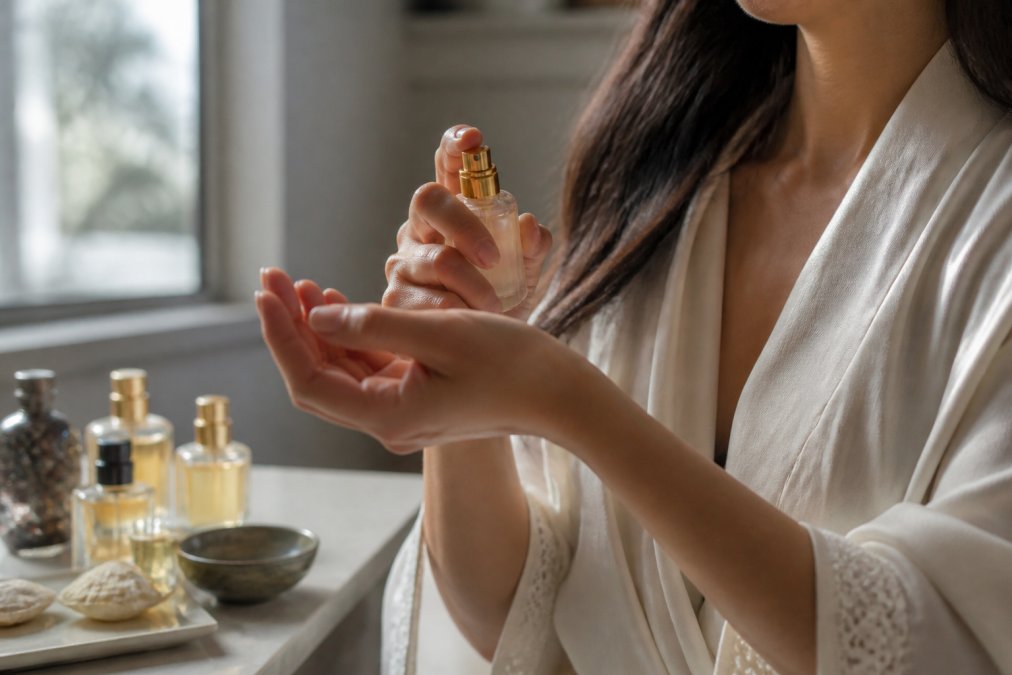
Application location matters more than most people realize. Pulse points (wrists, neck, inner elbows) are warm, causing faster diffusion. A better strategy: apply to pulse points for the scent to develop, but also apply to cooler areas like the chest or back of the neck where temperature is lower and the fragrance lasts longer.
Spraying creates a mist that disperses more, increasing sillage but decreasing longevity slightly. Dabbing (using the bottle stopper to apply directly to skin) concentrates the fragrance and extends wear time. For maximum longevity, dab on pulse points, then spray on hair or clothing, fragrance clings to fabric longer than skin.
Storage is critical and often overlooked. Fragrance degrades with heat, light, and air exposure. Storing bottles in a cool, dark place preserves the composition. A fragrance stored properly lasts years without significant degradation. Stored in a warm bathroom, it can deteriorate noticeably within months.
Layering and Skin Preparation
Layering is the most effective longevity hack. Applying fragrance to moisturized skin extends wear time because the fragrance oils have something to grip. Apply an unscented lotion or fragrance-free moisturizer to pulse points, let it set for a minute, then apply fragrance. This extends longevity by 2-3 hours.
Some fragrance houses offer layering products, body lotions, shower gels, or oils in the same scent. Layering with these products amplifies sillage and longevity because you're adding fragrance molecules on top of fragrance molecules.
Exfoliating before application removes dead skin cells that can trap and degrade fragrance. Clean skin holds fragrance better. Spraying fragrance on fabric, a scarf, jacket, or collar, extends longevity dramatically because fragrance clings to fibers longer than skin.
Niche Fragrance Longevity in Real Conditions
Real-world performance differs from laboratory conditions. In office conditions, climate-controlled and low activity, longevity is optimal. A properly applied EDP fragrance will last 8+ hours. In outdoor conditions with temperature fluctuations, wind, and physical activity, longevity decreases. Heat accelerates evaporation.
Niche fragrances formulated at high concentration (EDP and Extrait) handle these conditions better than lower-concentration designer fragrances because they have more aromatic molecules to lose before becoming imperceptible.
Batch variation is a real factor in niche fragrance performance. Because niche fragrances often use natural materials and smaller production runs, there can be slight variations between batches. Designer fragrances, formulated with strict standardization, have virtually no batch variation.
Storage and age also affect niche fragrances. Some fragrances improve with age as components macerate together, developing complexity. Others remain stable.
Price, Performance, and Realistic Expectations
Designer fragrances typically range from $26.80-$180 for 1.7 oz. Niche fragrances can range from $20.99 to over $500 for 1.7 oz. The price difference reflects raw material quality, concentration, production volume, and marketing spend.
Designer fragrances benefit from massive marketing budgets and established retail networks. Niche fragrances have smaller marketing budgets and limited distribution, so more of the price goes directly to ingredients and formulation.
When you account for longevity, the cost per wear might favor the niche fragrance. If an EDT lasts 4 hours and an EDP lasts 8, you're getting twice the wear time. The niche fragrance might cost less per wear, even at a higher per-ounce price.
Some designer fragrances in Extrait concentration perform comparably to niche fragrances and might offer better value. Conversely, some niche fragrances at EDP concentration don't justify their premium over a well-formulated designer EDP. The category name is less important than the actual concentration and formulation.
Roma Parfum's 40% oil concentration positions it at the extreme end of the longevity spectrum. You're paying for that concentration and the rare botanicals that support it.
| Factor | Designer Fragrance | Niche Fragrance |
|---|---|---|
| Typical Concentration | EDT (5-15%) | EDP/Extrait (15-40%) |
| Average Longevity | 4-6 hours | 8-12+ hours |
| Price Range | $26.80-$180 | $20.99-$514.50+ |
| Ingredient Quality | Good | Excellent/Rare |
| Production Volume | Large | Small |
| Scent Evolution | Often linear | Often complex |
| Availability | Wide | Limited |
| Batch Consistency | High | Variable (natural materials) |
The longevity question isn't about niche versus designer as absolutes. It's about understanding the variables: concentration, raw materials, fixatives, skin chemistry, application technique. A well-formulated designer fragrance in Extrait concentration will outlast a poorly formulated niche fragrance in EDP. Conversely, a thoughtfully constructed niche EDP will outlast a designer EDT, often at comparable cost per wear.
What separates exceptional fragrances from average ones isn't the category label. It's the perfumer's commitment to longevity through concentration and fixative quality, the sourcing of materials that support sustained wear, and the formulation strategy that prioritizes evolution over immediate impact. When evaluating fragrances, focus on concentration first. Then assess ingredient quality and formulation philosophy. The label matters far less than what's actually in the bottle.
Get on the Roma Parfum mailing list to explore fragrances formulated at 40% oil concentration with hand-extracted oils and rare botanicals designed for extreme longevity. These aren't fragrances that fade by afternoon, they're compositions engineered to linger for 36 hours, delivering the sustained presence that defines truly long-lasting luxury fragrance.
Frequently Asked Questions
Which type of fragrance lasts longer, niche or designer?
Niche fragrances typically last longer due to higher oil concentrations (often 40% or more) compared to designer fragrances, which usually contain 15-20% fragrance oils in eau de parfum form. However, longevity also depends on specific ingredients, base notes, and individual skin chemistry. A designer eau de parfum can sometimes outlast a poorly formulated niche fragrance, but premium niche brands prioritize longevity through superior fixatives and raw materials.
Does perfume concentration affect how long a fragrance lasts?
Yes, concentration is one of the most significant factors in fragrance longevity. Eau de parfum (15-20% oils) lasts 4-8 hours, while eau de toilette (5-15% oils) typically fades within 2-4 hours. Extrait de parfum (40%+ oils) can persist for 12+ hours or even 36 hours on skin. Higher concentration means more fragrance molecules available to gradually release over time, creating longer-lasting sillage and projection.
What factors affect fragrance longevity the most?
The primary factors are fragrance concentration, base note composition (including fixatives like oakmoss and vetiver), quality of raw materials, skin type and pH, ambient temperature, and application method. Niche fragrances often excel because they use premium fixatives and hand-extracted oils that bond more effectively to skin. Synthetic vs. natural ingredients also matters, certain synthetics provide superior longevity than their natural counterparts.
How can I make my fragrance last longer throughout the day?
Apply fragrance to pulse points (wrists, neck, behind ears) where body heat increases diffusion. Moisturize skin beforehand, as hydrated skin holds fragrance longer than dry skin. Layer by using matching body lotion or oil before applying the fragrance. Store fragrances in cool, dark places away from direct sunlight to preserve potency. Avoid rubbing wrists together, which breaks fragrance molecules; instead, let the scent settle naturally for 15 minutes after application.
Is niche fragrance always better than designer fragrance?
Not necessarily. While niche fragrances often offer superior longevity, unique scent profiles, and premium ingredients, some designer fragrances perform exceptionally well, especially in higher concentrations like eau de parfum or parfum. The best choice depends on your priorities: if extreme longevity and distinctive artisan compositions matter most, niche is typically superior. If you prefer mass-appealing scents with proven quality at varied price points, designer options offer strong alternatives.
This article was written using GrandRanker