

Table of Contents
- Understanding Ingredient Integrity and Authenticity
- How to Read Ingredient Labels and FDA Ingredient Disclosure Requirements
- Sensory Evaluation: Smell, Texture, and Appearance
- Identifying Signs of Adulteration and Substitution
- Tools for Verifying Ingredient Purity and Authenticity
- Niche Perfume Ingredient Quality and Third-Party Certifications
- Questions to Ask Suppliers About Raw Material Sourcing
- Conclusion: Building Your Ingredient Authentication Toolkit
Last Updated: August 9, 2026
Understanding Ingredient Integrity and Authenticity
Ingredient integrity is the assurance that what you're purchasing is exactly what the label claims, no substitutions, no dilutions, no hidden adulterants. In niche fragrance, this matters profoundly. A $200 bottle of extrait de parfum with hand-extracted jasmine sambac should contain exactly that, not a cheaper synthetic approximation.
The fragrance industry has a transparency problem. Unlike food, where the FDA requires detailed ingredient disclosure, perfumes hide specifics behind the catch-all term "fragrance" or "parfum." This opacity creates space for counterfeit ingredients and mislabeling to thrive.
At Roma Parfum, we've seen discerning enthusiasts invest in rare botanicals only to wonder if what arrived matches the bottle's story. The good news: you don't need a chemistry degree to spot problems. With the right knowledge, you can authenticate niche ingredients yourself.
This guide covers sensory evaluation, label analysis, supply chain verification, and third-party testing. By the end, you'll have a toolkit to confidently assess whether a fragrance delivers what it promises.
How to Read Ingredient Labels and FDA Ingredient Disclosure Requirements
The FDA permits fragrance manufacturers to list all fragrance components under a single umbrella term: "fragrance" or "parfum." This means a complex composition with 50+ ingredients can hide behind two words.
However, the FDA does require certain disclosures. Allergens like limonene, linalool, and geraniol must be listed separately if they exceed specific thresholds. For niche fragrances positioned as premium or artisanal, brands often disclose their full ingredient list voluntarily, a signal of confidence in sourcing quality. When a luxury house refuses to disclose beyond "fragrance," it's worth questioning why.
Decoding INCI Nomenclature
The International Nomenclature of Cosmetic Ingredients (INCI) is the standardized naming system used on cosmetic labels worldwide. Learning INCI names helps you identify exactly what you're buying.
Natural plant-derived ingredients list the plant name first, followed by the part used: "Rosa Damascena Flower Oil" (rose oil from the flower), "Santalum Album Wood Oil" (sandalwood from the wood). Synthetic ingredients use chemical names: "Ethyl Vanillin" (synthetic vanilla), "Iso E Super" (synthetic woody note).
Ingredients are listed in descending order of concentration, except fragrance components. If you see "Alcohol Denat" listed first, the fragrance is an eau de toilette or eau de cologne, lower concentration and shorter longevity. If you see "Fragrance" listed early but the product claims to be an extrait de parfum, that's a mismatch worth investigating.
Pay attention to qualifying words. "Extract" signals a concentrated botanical preparation. "Absolute" indicates a solvent-extracted ingredient, often more potent than essential oil. "Essential Oil" means steam-distilled or cold-pressed. These distinctions affect both quality and price.
What FDA Requires on Fragrance Labels
The FDA mandates ingredient lists, though fragrance components can be grouped. Claims about ingredient sourcing, extraction method, or purity fall under FTC jurisdiction and require substantiation.
The FDA also requires that allergens be clearly disclosed if they exceed threshold concentrations. The 26 fragrance allergens (including linalool, limonene, eugenol) must appear separately if present. Some brands list all fragrance allergens, even below threshold levels, signaling transparency.
Check the label for a batch number and manufacturing date. Legitimate niche brands include these details. Counterfeits often omit them or use vague codes.
Sensory Evaluation: Smell, Texture, and Appearance
Your senses are your first line of defense against adulterated or counterfeit ingredients.
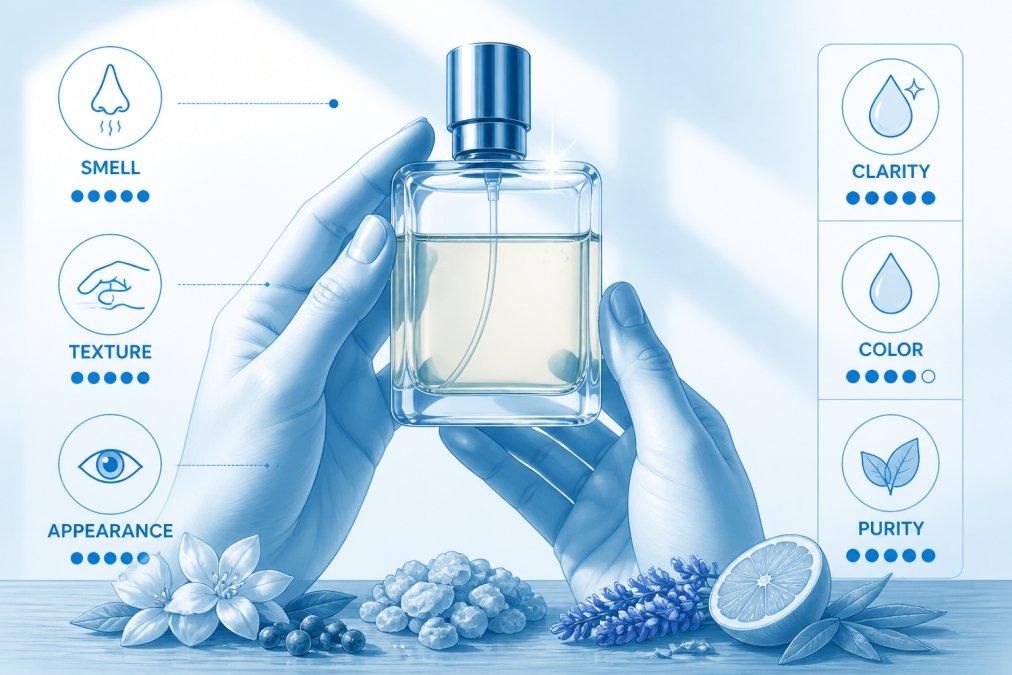
Appearance and clarity. Authentic niche fragrances should be visually consistent with their ingredient profile. A fragrance heavy in dark botanicals like oud, tobacco, or vetiver will have a deeper amber or brown hue. Citrus-forward compositions should be pale yellow or nearly clear. Cloudiness or unexpected sediment can indicate poor filtration, contamination, or degradation.
Hold the bottle to light. You should see clear liquid with no floating particles or separation. Fresh fragrances should be transparent. Murky liquid in a new bottle is suspicious.
Scent profile and development. Spray a small amount on a test strip or your wrist. Authentic niche ingredients have complex, evolving scent profiles. Real jasmine sambac absolute smells green and slightly animalic on opening, then develops floral sweetness. Synthetic jasmine smells cleaner and more linear, with less development.
Pay attention to the dry-down. Does the fragrance evolve over 4-6 hours, or remain static? Complex fragrances with authentic ingredients show clear progression: top notes (citrus, herbs) fade, heart notes (florals, spices) emerge, base notes (woods, musks) anchor the composition. Static scent suggests simpler composition or lower-quality ingredients.
Texture and feel. Spray a small amount between your fingers and rub gently. Authentic fragrances with high oil concentration should feel slightly oily or waxy, not dry. The fragrance should cling to your skin and build in intensity as alcohol evaporates. Thin, quick-drying fragrance suggests lower concentration than claimed.
Longevity is your most reliable sensory test. A true extrait de parfum (40% fragrance oils) should last 8-12 hours or longer. An eau de parfum (15-20% oils) should last 6-8 hours. An eau de toilette (5-15% oils) should last 3-4 hours. If a fragrance claims to be an extrait but fades after 2 hours, the concentration is misrepresented.
Identifying Signs of Adulteration and Substitution
Adulteration, mixing lower-cost ingredients with premium ones or replacing expensive components with cheaper alternatives, is common in the fragrance supply chain.
Inconsistent batches. Buy the same fragrance twice, separated by months, from the same retailer. Compare them side by side. The scent should be identical. Significant batch variation suggests reformulation without disclosure or adulteration. Legitimate niche houses maintain strict quality control.
Price drops without explanation. If a fragrance suddenly drops 30-40% in price, something changed. Authentic niche fragrances hold their value because ingredients are expensive. Steep discounts warrant investigation.
Ingredient substitution. A fragrance might claim "Bulgarian rose absolute" but contain a cheaper rose variant or synthetic rose compound. The difference is subtle but real. True agarwood oud is expensive, $50,000+ per kilogram. Many fragrances claiming "oud" actually use synthetic oud compounds or lower-grade agarwood. Authentic oud smells animalic, slightly medicinal, and evolves over hours. Synthetic oud smells cleaner and more linear.
Dilution. If a fragrance marketed as an extrait de parfum fades after 3-4 hours instead of 8+, it's been diluted. You're paying for 40% oil concentration but receiving 15-20%.
Visual inconsistencies. Counterfeits often have printing errors, misspelled words, or inconsistent bottle design. Check the label closely. Does the font match previous batches? Are allergen disclosures consistent? Do batch codes follow the brand's standard format?
Tools for Verifying Ingredient Purity and Authenticity
Beyond sensory evaluation, several tools can verify ingredient authenticity.
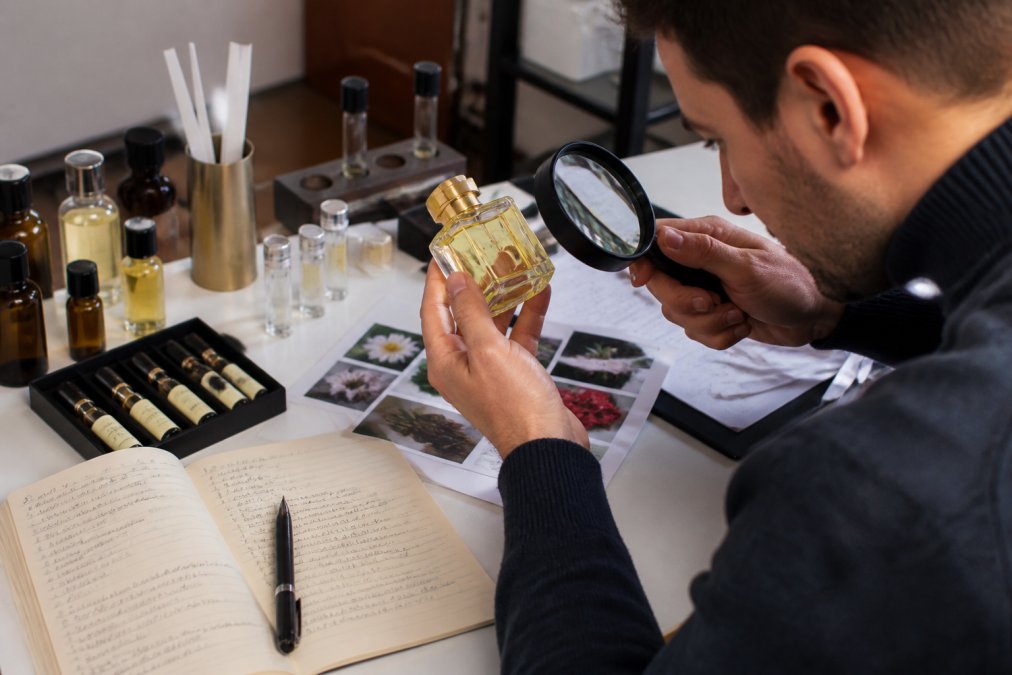
Digital verification platforms. Some niche fragrance brands now use blockchain or QR code verification to track ingredients from source to bottle. Scan the QR code on the box, and you'll see the ingredient sourcing story, batch number, and supply chain transparency. Forward-thinking brands are implementing these systems to build consumer trust.
Third-party testing labs. For serious ingredient verification, send a fragrance sample to a testing lab. Gas chromatography-mass spectrometry (GC-MS) analysis identifies every chemical compound and measures concentration levels. This costs $200-500 per sample but is the gold standard for authenticity verification. A GC-MS report shows exactly what's in the bottle, catching adulteration and fraud.
Supplier transparency requests. Contact the brand directly and ask for supplier documentation. Legitimate niche houses can trace ingredients back to the source. They should answer: Where was this ingredient sourced? Which supplier provided it? What testing did they perform? If a brand refuses, that's a red flag.
Organoleptic evaluation by trained sensory analysts. Some fragrance consultants offer sensory authentication services, evaluating scent profile, longevity, and development against known authentic samples.
Regulatory compliance checks. Verify that the brand complies with FDA and FTC regulations. Check the FTC's website for complaints or enforcement actions. The FDA's cosmetics facility database lists registered fragrance manufacturers. If a brand isn't registered, that's a concern.
Niche Perfume Ingredient Quality and Third-Party Certifications
Third-party certifications signal that a brand's ingredients meet external standards. They don't guarantee authenticity but indicate commitment to transparency and quality.
IFRA certification. The International Fragrance Association sets safety standards for fragrance ingredients. IFRA certification means the brand's fragrances comply with safety limits for allergens and potentially hazardous compounds.
Organic and natural certifications. If a fragrance claims organic ingredients, look for third-party certification from USDA Organic, ECOCERT, or Cosmos. These verify that ingredients were grown without synthetic pesticides and processed without harmful chemicals.
Cruelty-free certifications. Leaping Bunny and PETA certify that a brand doesn't test on animals. This signals broader ethical standards that often correlate with quality control.
ISO standards. Some premium fragrance houses comply with ISO 9001 (quality management) or ISO 22716 (cosmetics manufacturing standards), indicating systematic quality control.
The absence of certifications doesn't mean a fragrance is inauthentic. Many small artisan perfumers skip formal certifications because the cost isn't justified for small production runs.
Questions to Ask Suppliers About Raw Material Sourcing
When you contact a fragrance brand, ask specific questions about ingredient sourcing. Their willingness to answer reveals how seriously they take authenticity.
Where is this ingredient sourced? A legitimate supplier should name the country or region. "Bulgarian rose absolute from Bulgaria" is more credible than "rose absolute from an undisclosed source."
Who is your supplier? Reputable brands work with established ingredient suppliers like Givaudan, IFF, or smaller artisan suppliers with known reputations.
What testing do you perform? Do they test incoming ingredients for purity? Do they check for contaminants, heavy metals, or pesticide residues? Serious brands have documented testing protocols.
What's the extraction method? For botanical ingredients, this matters. Is the jasmine absolute solvent-extracted or CO2 extract? Different methods yield different quality levels and scent profiles.
Can you provide a certificate of analysis? Legitimate suppliers issue CoA documents verifying ingredient purity, concentration, and testing results.
What's the shelf life and storage requirement? Authentic ingredients have specific shelf-life windows and storage needs. Natural jasmine absolute oxidizes over time and should be stored cool and dark.
Are there batch variations? Honest brands acknowledge that natural ingredients vary slightly from batch to batch. If a brand claims perfect consistency across all batches, they're likely using synthetics.
Conclusion: Building Your Ingredient Authentication Toolkit
Identifying authentic niche ingredients requires combining sensory evaluation, label literacy, supply chain transparency, and when necessary, third-party testing. Start with your senses: does the fragrance smell complex and evolve over time? Does it last as long as claimed?
Move to the label: can you decode INCI names? Do allergen disclosures match the ingredient list? Are batch numbers and manufacturing dates present?
Then investigate the source: can the brand trace ingredients back to their origin? Do they use third-party certifications? Will they answer specific questions about sourcing and testing?
Finally, if you're investing significantly in a rare or expensive fragrance, consider third-party testing. A GC-MS analysis is insurance against counterfeit or adulterated ingredients.
Building trust in niche fragrance sourcing takes time, but it's worth the effort. Brands like Roma Parfum that prioritize ingredient transparency, work with certified suppliers, and maintain rigorous quality control deserve your investment. When you know your fragrance contains authentic, hand-extracted oils that will last 36 hours on your skin, the premium price becomes justified. Start by asking the right questions of your suppliers, and you'll quickly separate authentic niche fragrances from expensive marketing.
| Step | Action | Verification Method |
|---|---|---|
| 1. Sensory Check | Evaluate appearance, scent profile, longevity | Visual inspection, wear test |
| 2. Label Analysis | Decode INCI names, check allergen disclosures | Read ingredient list carefully |
| 3. Supplier Questions | Ask about sourcing, testing, extraction | Direct brand communication |
| 4. Certification Review | Check for IFRA, organic, or ISO certifications | Brand website or third-party databases |
| 5. Batch Comparison | Buy the same fragrance twice and compare | Side-by-side sensory evaluation |
| 6. Third-Party Testing | Send sample to lab for GC-MS analysis | Professional laboratory report |
Frequently Asked Questions
How do I know if a niche ingredient is actually authentic or just marketing?
Authentic niche ingredients show traceability through supply chain documentation, batch testing records, and third-party certifications. Check the label for INCI names (the standardized chemical names required by the FDA), verify the supplier's sourcing practices, and request certificates of analysis. Real niche ingredients cost more because sourcing, testing, and verification add significant expense. Ask your supplier directly for proof of origin and purity testing results, legitimate brands provide this information.
What does FDA ingredient disclosure require for fragrance products?
The FDA requires fragrance manufacturers to disclose all ingredients on product labels using INCI nomenclature, with ingredients listed in descending order of concentration. However, fragrance compositions themselves can be listed as 'fragrance' or 'parfum' as a single ingredient to protect proprietary formulas. This means you won't see every individual aromatic component. Niche brands often voluntarily disclose more detail to build trust and differentiate from mass-market options that hide complexity behind the generic 'fragrance' label.
How can I tell the difference between natural and synthetic niche ingredients?
Natural ingredients come from botanical sources and carry the botanical name on labels (e.g., 'Rosa damascena oil'). Synthetic versions are chemically identical but lab-created, listed with chemical names (e.g., 'benzyl acetate'). Both can be high-quality, synthetics offer consistency and sustainability. The key is transparency: authentic niche brands disclose whether an ingredient is natural or synthetic. Check the INCI list, ask your supplier, and look for certifications like ECOCERT or COSMOS that verify natural sourcing if that matters to you.
What certifications should I look for to verify ingredient authenticity?
Look for USP (United States Pharmacopeia) verification, which tests purity and potency. ECOCERT and COSMOS certify organic and natural ingredients. ISO 9001 indicates manufacturing quality standards. For botanical ingredients, botanical identification certifications confirm correct plant species. Third-party testing labs (like those accredited by AOAC International) provide batch-specific purity reports. Niche fragrance houses often conduct GC-MS (gas chromatography-mass spectrometry) testing to verify chemical composition. Request these certificates directly from suppliers, brands confident in their authenticity provide them readily.
How do I identify commonly mislabeled or counterfeit niche ingredients?
Counterfeit ingredients often appear cheaper than market rate, lack batch-specific documentation, and show inconsistent sensory properties (smell, color, viscosity). Adulteration is common with expensive botanicals like oud, sandalwood, and rose absolute, diluted versions smell weaker or 'off.' Verify authenticity by comparing sensory profiles across multiple batches (real ingredients show minor variation but consistent character), requesting chromatography reports, and buying from suppliers with established supply chain transparency. If a price seems too good to be true for a rare ingredient, it likely is.
What questions should I ask a fragrance supplier about ingredient sourcing?
Ask: Where is each ingredient sourced geographically? Do you have direct relationships with growers or middlemen? What testing do you perform on each batch? Can you provide certificates of analysis? How do you ensure supply chain traceability? What happens if a batch fails quality testing? How do you store and handle ingredients to preserve volatile compounds? Legitimate niche suppliers answer these in detail. Red flags include vague sourcing ('imported'), no testing records, or refusal to discuss supply chain. Transparency is a hallmark of authentic niche fragrance houses.
Are there digital tools I can use to verify ingredient purity?
Yes. Request GC-MS (gas chromatography-mass spectrometry) reports from your supplier, these show the exact chemical composition of an ingredient. Some niche brands publish batch-specific testing results online or via QR codes on packaging. Spectroscopy databases and botanical identification apps help verify plant species. However, the most reliable verification remains direct communication with your supplier and third-party testing labs. Digital tools supplement but don't replace personal due diligence. Roma Parfum and other legitimate niche houses maintain detailed sourcing and testing documentation available to discerning customers.
This article was written using GrandRanker