

Table of Contents
- Why Perfume Fades: Body Chemistry and Skin Type
- Apply Perfume to the Best Pulse Points for Longevity
- Prepare Your Skin: Moisturize Before You Spray
- Perfume Concentration Guide: Choosing Formulations That Last
- Fragrance Layering Techniques for Extended Wear
- How to Store Perfume to Make It Last Longer
- Advanced Longevity Hacks and Common Mistakes
- Conclusion
Last Updated: August 22, 2026
Why Perfume Fades: Body Chemistry and Skin Type
Perfume fades at different rates depending on your skin's pH level, moisture content, and natural oils. When you apply fragrance, volatile compounds evaporate immediately, the rate depends on your skin type. Dry, acidic skin lacking natural oils causes fragrance to dissipate faster, while well-hydrated skin with balanced pH and healthy sebum production helps scent linger longer.
Oily skin holds fragrance longest because natural oils provide a stable base for fragrance molecules. Normal to combination skin typically offers good longevity. Dry skin presents the biggest challenge: it absorbs fragrance quickly and offers less surface area for scent molecules to settle. Understanding your skin type is critical for choosing the right application strategy.
Apply Perfume to the Best Pulse Points for Longevity
Apply fragrance to pulse points, areas where your body generates heat, to maximize longevity and projection. These zones include your inner wrists, inside of elbows, behind ears, base of throat, and inside of ankles. Heat from these areas causes fragrance to diffuse more effectively throughout the day.
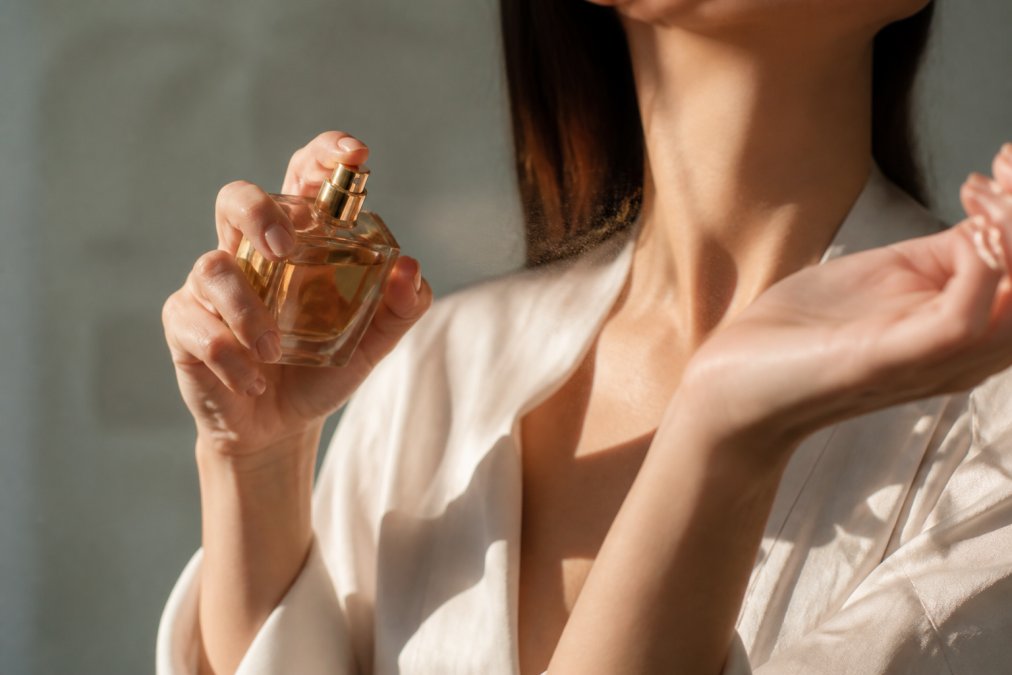
Apply fragrance to at least three pulse points for optimal coverage: inner wrists, behind ears, and the base of your throat. Don't rub your wrists together after applying, this friction breaks down fragrance molecules and shortens longevity. Instead, press gently for 2-3 seconds. Hold the bottle 4-6 inches from your skin when spraying to allow even dispersal rather than pooling.
Prepare Your Skin: Moisturize Before You Spray
Hydrated skin is fragrance's best foundation. Apply an unscented moisturizer to pulse points 2-3 minutes before applying fragrance. Use lightweight moisturizer rather than heavy cream, you want hydration, not occlusion. The slightly tacky surface helps fragrance molecules adhere more effectively.
The petroleum jelly base technique
Petroleum jelly extends fragrance longevity significantly by slowing evaporation. Apply a thin layer to pulse points, then spray fragrance directly onto it. Some users report 2-3 additional hours of longevity, though the greasy texture can stain clothing, making it best for evening wear rather than daily use.
A middle-ground approach uses hydrating primer or makeup setting spray on pulse points before fragrance application. These products create an adhesive surface without the greasiness of petroleum jelly.
Perfume Concentration Guide: Choosing Formulations That Last
Fragrance concentration, the percentage of fragrance oils versus alcohol and water, directly determines longevity.
Eau de Cologne contains 2-4% fragrance concentration and lasts 1-2 hours.
Eau de Toilette contains 5-8% fragrance concentration and lasts 3-5 hours depending on skin type and application.
Eau de Parfum contains 15-20% fragrance concentration and lasts 6-8 hours or longer. This is the sweet spot for all-day longevity without the cost of pure perfume. Roma Parfum focuses on this concentration for serious fragrance enthusiasts seeking genuine staying power.
Extrait de Parfum (pure perfume) contains 20-40% fragrance concentration and lasts 8-12 hours or more. Though more expensive, you need only 1-2 sprays rather than 3-4, making cost-per-wear comparable to eau de parfum.
When shopping, check the concentration listed on the bottle. High-concentration fragrances also project further, creating better sillage, the scent trail you leave behind.
Fragrance Layering Techniques for Extended Wear
Fragrance layering amplifies longevity by creating multiple scent layers that release at different rates. Apply a scented body oil or lotion to pulse points immediately after showering while skin is slightly damp. Spray fragrance 2-3 minutes later, once the base product has absorbed.
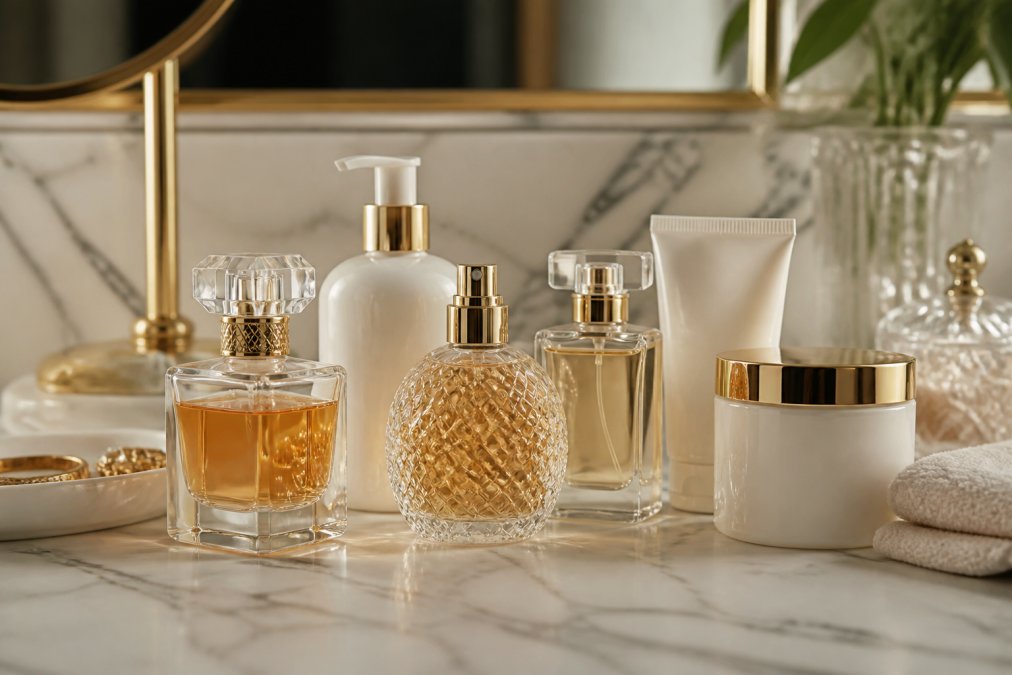
Optionally add a fragrance-infused hair mist or light hairspray. Hair holds fragrance exceptionally well because it's porous and doesn't absorb fragrance the way skin does. This extends the scent trail and creates a subtle halo effect.
Use complementary scents when layering. Many luxury fragrance houses offer matching body products specifically formulated to complement their fragrances' scent profiles. Layering also allows you to adjust intensity, use only the body product for subtle projection, or layer all three products for maximum presence.
How to Store Perfume to Make It Last Longer
Storage conditions directly impact both how long fragrance lasts on your skin and how long the bottle maintains quality. Keep fragrance away from direct sunlight and artificial light, which break down fragrance molecules. Store in a cool, dark place like a closet or drawer.
Avoid bathrooms, where humidity and temperature fluctuate constantly. These fluctuations cause the liquid to expand and contract, compromising the seal and accelerating oxidation. Keep fragrance away from heat sources, radiators, heating vents, and sunny windowsills.
Store bottles in their original boxes if possible, the box blocks light and provides insulation. Avoid opening bottles unnecessarily; every opening exposes fragrance to air and accelerates oxidation.
For travel, use solid perfume or fragrance oil rather than liquid spray. Solid perfumes are more stable during temperature changes and won't leak. Alternatively, decant liquid fragrance into a sealed travel atomizer and store it in a cool bag with an ice pack.
Advanced Longevity Hacks and Common Mistakes
Scent fatigue and olfactory adaptation
Scent fatigue occurs when your olfactory receptors become desensitized to constant fragrance exposure after 15-30 minutes (peer-reviewed research). You stop smelling it, but others can still perceive it clearly. This is neurological, not a fragrance failure.
Rotate between 2-3 fragrances rather than wearing the same scent daily to give your olfactory system time to reset. Some practitioners use scent-free intervals, days when they wear no fragrance, to reset their perception.
Travel-friendly longevity strategies
Solid perfumes and fragrance oils are more travel-friendly than liquid sprays. They don't leak, are less sensitive to temperature changes, and have fewer TSA restrictions. Fragrance-infused clothing items like scarves or hats extend longevity without requiring skin application and are easy to refresh mid-day.
What not to do
Don't apply fragrance immediately after showering, your skin is too warm and damp, accelerating evaporation. Wait 5-10 minutes for your skin to cool and dry slightly.
Avoid spraying fragrance directly on clothes. Fragrance is designed to interact with skin chemistry; fabric doesn't provide the same complex scent development and can stain delicate materials.
Don't assume expensive fragrances automatically last longer. Concentration level and formulation quality matter more than price. A well-formulated mid-range eau de parfum often outlasts a poorly formulated luxury fragrance.
| Longevity Factor | Impact on Duration | Best Practice |
|---|---|---|
| Fragrance concentration | 3-12 hours variance | Choose eau de parfum or extrait |
| Skin hydration | 2-4 hours variance | Moisturize before application |
| Pulse point application | 2-3 hours variance | Apply to 3+ pulse points |
| Fragrance layering | 2-4 hours extension | Use matching body products |
| Storage conditions | Prevents degradation | Keep cool, dark, sealed |
| Scent fatigue | Perception loss only | Rotate between fragrances |
Making perfume last all day requires understanding your skin's chemistry, choosing the right fragrance concentration, and applying strategic techniques that extend longevity and projection. The difference between a fragrance that fades by lunch and one that lasts through evening often comes down to preparation and application method rather than the fragrance itself.
Roma Parfum's high-concentration fragrances are specifically formulated for serious longevity, many delivering 8-12 hours of wear when applied to properly prepared skin. The combination of 40% oil concentration and focus on rare botanical ingredients creates fragrances that interact beautifully with skin chemistry. When you invest in a fragrance designed for extreme longevity, these application techniques ensure you experience the staying power the formulation promises. Get on the Roma Parfum mailing list to discover fragrances crafted for all-day wear and join a community of collectors who understand that fragrance longevity is both art and science.
Frequently Asked Questions
Does applying lotion or moisturizer before perfume make it last longer?
Yes. Hydrated skin holds fragrance longer because perfume molecules absorb into the skin barrier rather than evaporating immediately. Apply an unscented moisturizer to pulse points before spraying. Dry skin causes faster evaporation, so maintaining proper hydration is essential for extended longevity throughout the day.
What's the difference between eau de toilette and eau de parfum for longevity?
Eau de parfum contains 15-20% fragrance concentration and lasts 4-8 hours, while eau de toilette has 5-15% concentration and typically fades in 2-4 hours. Extrait de parfum, with 20-40% oil concentration, delivers the longest wear and projection. Higher fragrance concentration directly correlates with extended sillage and scent trail throughout your day.
Should you rub your wrists together after spraying perfume?
No. Rubbing breaks down fragrance molecules and accelerates the dry down process, reducing longevity. Instead, let the fragrance settle naturally on your skin. Gentle dabbing or allowing air contact preserves the top notes, heart notes, and base notes, maintaining the full scent profile for hours longer than rubbing would.
How does skin pH affect how long perfume lasts on my body?
Skin pH influences dermal absorption and evaporation rates. More acidic skin (lower pH) tends to hold fragrance longer, while alkaline skin may cause faster evaporation. Individual body chemistry varies significantly, which is why the same perfume performs differently on different people. Testing on clean, hydrated skin reveals how your unique pH interacts with fragrance compounds.
This article was written using GrandRanker