

Table of Contents
- What Makes Artisan Fragrance Different for Sensitive Skin
- Natural vs. Synthetic Fragrance for Sensitive Skin: What the Science Shows
- How to Identify High-Quality Perfume Ingredients
- Artisan Fragrance Patch Testing Guide
- Common Triggers for Fragrance Sensitivity
- Safe Application Techniques for Sensitive Skin
- Why Niche Artisan Perfumery Matters for Quality and Safety
- Conclusion
Last Updated: August 19, 2026
What Makes Artisan Fragrance Different for Sensitive Skin
Artisan fragrance quality for sensitive skin requires a fundamentally different approach than mass-market perfumes. Roma Parfum and other niche fragrance houses prioritize ingredient transparency and concentration control in ways that commercial manufacturers simply don't.
The core difference lies in how ingredients are sourced and combined. Artisan perfumers work with smaller batches, hand-extracted oils, and rare botanicals that allow for precise formulation. This level of control matters enormously when your skin reacts to synthetic musks, phthalates, or alcohol-heavy bases. Mass-market fragrances often rely on cost-cutting formulations that prioritize shelf stability and shelf appeal over dermatological compatibility.
Consider the concentration itself. Most commercial fragrances sit at 3-5% fragrance oils mixed with alcohol and filler. Artisan houses typically work at higher concentrations, 40% oil concentration is common among quality niche perfumers. This means your skin absorbs fewer volatile organic compounds and synthetic stabilizers, reducing irritation triggers significantly.
The storytelling aspect of artisan fragrance isn't just marketing. When a fragrance is crafted as a personal anthem or love letter, as Roma Parfum describes its approach, the formulation reflects intentionality. Every aroma molecule serves the narrative. This deliberate composition eliminates the unnecessary synthetics that exist only to hit price targets or extend shelf life.
Natural vs. Synthetic Fragrance for Sensitive Skin: What the Science Shows
The choice between natural essential oils and synthetic fragrance compounds isn't straightforward for sensitive skin. Both can trigger reactions, the distinction matters less than ingredient transparency and concentration control.
Natural essential oils come from botanical extracts: jasmine, sandalwood, rose, vetiver. They're complex, containing hundreds of organic compounds. This complexity is their strength and weakness. Your skin gets exposure to multiple aroma molecules simultaneously, which can cause sensitization over time. However, natural oils typically lack the harsh synthetic stabilizers found in commercial perfumes. The dry down, how a fragrance evolves on your skin, tends to be gentler because there are fewer synthetic musks to linger and irritate.
Synthetic fragrances are laboratory-created molecules designed to replicate scents or create entirely new olfactory profiles. They offer consistency and longevity that natural oils struggle to match. The problem: many synthetics (particularly polycyclic musks and certain aldehydes) accumulate in skin tissue and trigger contact dermatitis with repeated exposure. Synthetic fragrances also rely on volatile organic compounds as carriers, which can damage your skin barrier if concentration is too high.
The real answer for sensitive skin isn't "natural is better", it's "transparent is better." Artisan fragrance houses publish detailed ingredient lists. You can identify specific triggers. Mass-market brands hide behind vague labeling like "fragrance" or "parfum," which legally conceals dozens of undisclosed chemicals.
Niche artisan perfumery typically favors natural essential oils and alcohol-based carriers over oil-based synthetics, but quality matters more than the category. A poorly formulated natural fragrance will irritate. A carefully balanced synthetic fragrance won't.
How to Identify High-Quality Perfume Ingredients
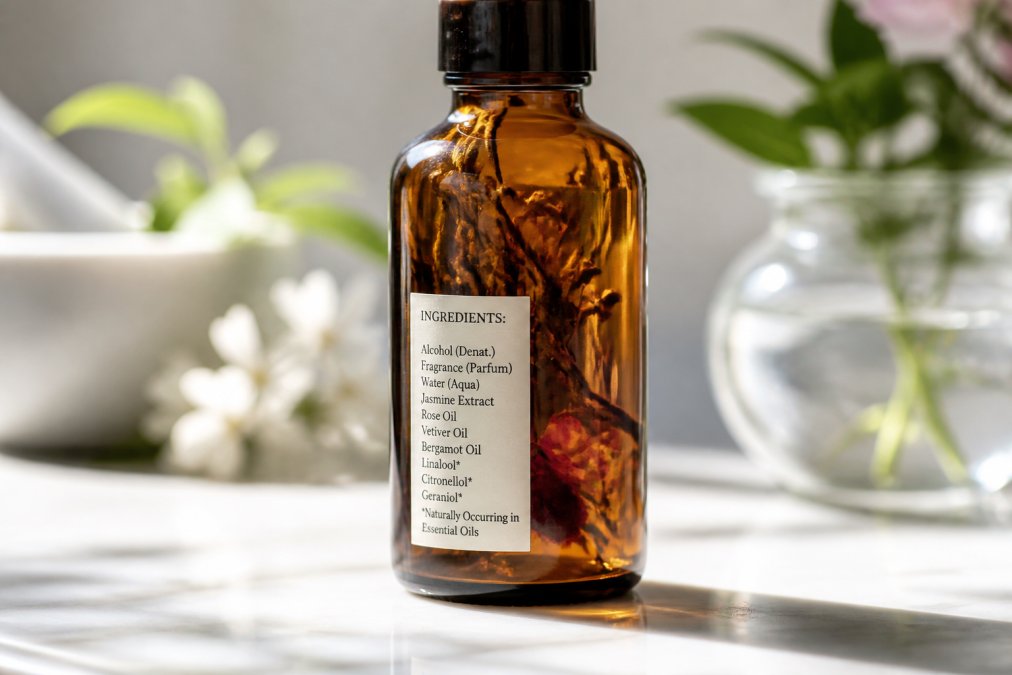
Quality fragrance for sensitive skin comes down to three measurable factors: ingredient transparency, carrier oil composition, and aroma molecule selection.
Start by demanding a full ingredient list. Legitimate artisan houses provide this freely. If a brand refuses or uses generic terms like "fragrance compound" or "proprietary blend," that's a red flag. You're buying blind, which is unacceptable when your skin is at stake.
Look for specific carrier oils. High-quality artisan fragrances use jojoba oil, argan oil, or fractionated coconut oil as bases. These are skin-compatible and won't strip your natural moisture barrier. Cheap fragrances use alcohol or mineral oil, both cause irritation in sensitive skin. The carrier oil percentage matters: a 40% oil concentration means less alcohol exposure per spray.
Examine the aroma molecules themselves. Quality artisan perfumers list top notes, middle notes, and base notes separately. Top notes are volatile, they evaporate quickly, typically within 15 minutes. Middle notes emerge next and last 2-4 hours. Base notes anchor the fragrance for 6-36 hours depending on concentration. For sensitive skin, base notes are critical. Synthetic musks and phthalates hide here. Artisan houses use natural musks (like ambroxan derived from ambergris) or skip them entirely in favor of vetiver, cedarwood, or sandalwood.
Ingredient Transparency and Certification
Transparency means you can trace every ingredient to its source. Legitimate artisan perfumers provide batch numbers, extraction dates, and botanical origins. Roma Parfum's approach, crafting fragrances as personal narratives, requires this level of detail because the story demands authenticity.
Certifications matter, though they're not foolproof. Look for dermatological testing claims. Hypoallergenic labeling means the fragrance has been tested for allergic reaction in a controlled setting. Paraben-free and phthalate-free claims are meaningful because these chemicals are common irritants. However, absence of one problematic ingredient doesn't guarantee safety, you still need the full ingredient list.
The most reliable indicator is small-batch production. Artisan fragrance houses produce limited quantities, which means each batch undergoes quality control. Mass-market manufacturers produce millions of units, making individual oversight impossible. Consistency suffers, and corner-cutting becomes inevitable.
Carrier Oil Analysis for Skin Compatibility
Your carrier oil determines how your skin reacts to the fragrance itself. This is often overlooked but critical for sensitive skin.
Jojoba oil is your gold standard. It's molecularly similar to human sebum, your skin's natural oil. It won't clog pores, won't strip moisture, and actually supports skin barrier function. Fragrances using jojoba as the primary carrier won't cause inflammation.
Argan oil is the second choice. It's rich in vitamin E and linoleic acid, both skin-protective compounds. It absorbs slowly, so the fragrance lasts longer without evaporating as quickly as alcohol-based alternatives.
Fractionated coconut oil is lighter than full coconut oil and less likely to cause breakouts. It evaporates faster than jojoba or argan, which means shorter wear time but also less skin contact.
Alcohol-based carriers (ethanol or denatured alcohol) are cheap and common in mass-market fragrances. They evaporate instantly, which is why commercial perfumes feel "dry." But alcohol strips your skin barrier, damages the acid mantle, and leaves your skin vulnerable to irritation and infection. Avoid entirely if you have sensitive skin.
Mineral oil and synthetic carriers are the worst options. They're occlusive, meaning they seal your skin and prevent natural moisture regulation. Over time, they degrade skin health and increase sensitivity reactions.
Artisan Fragrance Patch Testing Guide
Patch testing is non-negotiable for sensitive skin. It's the only way to identify your specific triggers before a full application causes contact dermatitis.
Step 1: Choose your test location. Select an area of clean, unbroken skin, typically the inner wrist, behind the ear, or the inside of your elbow. These areas have thinner skin and more sensitive nerve endings, so they'll reveal reactions faster than other parts of your body.
Step 2: Apply a small amount. Use a single spray or a cotton swab with one drop of fragrance. The goal is minimal exposure. You're testing for sensitivity, not enjoying the scent yet.
Step 3: Wait 24-48 hours. Don't wash the area. Monitor for redness, itching, burning, or swelling. Contact dermatitis can appear immediately or take hours to develop. Some people react within minutes; others take a full day.
Step 4: Document your reaction. Note the time, any symptoms, and how long they lasted. Keep a fragrance journal. Over time, you'll identify patterns, specific ingredients or concentrations that trigger you consistently.
Step 5: If no reaction, expand gradually. After 48 hours with no symptoms, apply to a larger area (inside of wrist, neck). Wait another 24 hours. Only after this secondary test should you apply to pulse points for daily wear.
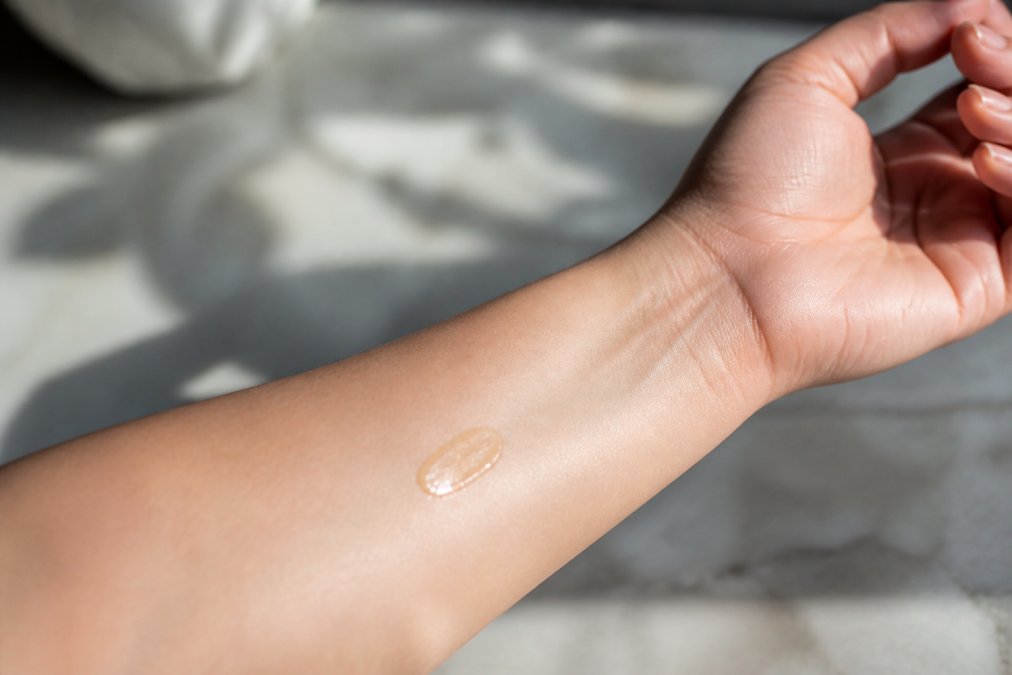
A common mistake is skipping this step because you're excited about a new fragrance. Sensitization is cumulative. You might tolerate a fragrance for weeks before your skin barrier breaks down and contact dermatitis erupts. Patch testing prevents this entirely.
Common Triggers for Fragrance Sensitivity
Understanding what causes your skin to react helps you navigate ingredient lists intelligently.
Synthetic musks are the single most common trigger. Polycyclic musks (galaxolide, tonalide) accumulate in skin tissue and trigger delayed allergic reactions. They're cheap, long-lasting, and ubiquitous in mass-market fragrances. Artisan houses avoid them entirely or use natural musks sparingly. Check ingredient lists specifically for "musk" followed by a chemical name, if you see it, skip that fragrance.
Phthalates are plasticizers used to stabilize fragrance oils and extend longevity. They're endocrine disruptors and skin irritants. The fragrance industry keeps phthalates hidden under the legal term "fragrance" or "parfum," which is why full transparency matters. Artisan houses that publish complete ingredient lists won't use them.
High alcohol concentration damages your skin barrier. Ethanol strips natural oils, disrupts the acid mantle, and increases permeability to other irritants. Fragrances with 80%+ alcohol content are particularly problematic for sensitive skin. Oil-based artisan fragrances eliminate this issue entirely.
Certain essential oils trigger reactions in sensitive individuals. Cinnamon, citrus oils, and ylang-ylang are common culprits. They're not inherently bad, they're just irritating to specific skin types. This is why patch testing matters. Your skin will tell you what it tolerates.
Aldehydes are synthetic compounds that create brightness and projection in fragrances. They're irritating to many people with sensitive skin. Artisan perfumers use them sparingly or substitute with natural alternatives like citral from lemongrass.
Fragrance concentration itself can trigger sensitivity. A 40% oil concentration fragrance is safer than a 5% alcohol-based fragrance because your skin absorbs less volatile material. Counterintuitively, "stronger" fragrances are often gentler on sensitive skin because they're more concentrated and require less application.
Safe Application Techniques for Sensitive Skin
How you apply fragrance matters as much as what you apply. Improper technique can trigger reactions even with high-quality artisan fragrances.
Apply to pulse points only. Pulse points, wrists, neck, behind ears, inside elbows, generate heat that activates fragrance molecules. This controlled release prevents overwhelming your skin. Never spray directly onto your face, chest, or large body areas. Never apply to broken or irritated skin.
Use a single spray or dab. One application is sufficient. Multiple sprays overwhelm your skin barrier and increase irritation risk. Artisan fragrances with high oil concentration project well from minimal application.
Never rub your wrists together. This breaks fragrance molecules and accelerates evaporation. It also creates friction that irritates sensitive skin. Apply to one wrist, let it dry, and leave it alone.
Apply to damp skin, not dry. Slightly damp skin (just after showering) helps fragrance molecules disperse more evenly and reduces concentration in one spot. Completely wet skin dilutes the fragrance; completely dry skin concentrates it too heavily.
Wait 15 minutes before dressing. Fragrance needs time to settle on your skin. Applying immediately before getting dressed traps fragrance against fabric, which concentrates it and increases irritation. The dry down happens over the first 15-30 minutes, let it complete before contact.
Rotate application locations. Don't apply to the same pulse point every single day. Your skin needs recovery time. Alternate between wrists one day, neck the next, behind ears the third day. This prevents sensitization from repeated exposure to the same location.
Never layer fragrances. Mixing two perfumes multiplies trigger potential. If you use scented lotion, body wash, and fragrance simultaneously, your skin is exposed to dozens of additional chemicals. Choose one fragrance and skip the coordinated products.
Why Niche Artisan Perfumery Matters for Quality and Safety
The niche artisan fragrance market exists specifically because mass-market perfumes fail sensitive skin. Understanding why this distinction matters protects your health.
Indie fragrance and niche perfumery prioritize storytelling and ingredient integrity over profit margins. A Roma Parfum fragrance isn't designed to appeal to 80% of the market, it's designed to resonate deeply with a specific person or community. This narrow focus allows for ingredient choices that wouldn't survive a mass-market cost analysis.
Mass-market fragrances optimize for shelf stability, chemical consistency, and low production cost. They use synthetic compounds because they're cheaper and more predictable than natural oils. They use high alcohol concentration because it extends shelf life and reduces manufacturing complexity. They hide ingredients behind legal loopholes because transparency would expose cost-cutting measures.
Artisan perfumers work with smaller production runs, which means they can afford hand-extracted oils and rare botanicals. They can publish complete ingredient lists because they're not hiding anything.
The handcrafted approach also means quality control happens at a human level. Each batch is evaluated, adjusted, and refined. Mass-market manufacturing is automated, consistency is achieved through chemistry, not craftsmanship. For sensitive skin, the human element matters. A perfumer who understands skin barrier function will formulate differently than a chemist optimizing for shelf stability.
Niche artisan perfumery also attracts perfumers who are passionate about their craft. They're not chasing quarterly earnings, they're building legacies. This mentality produces fragrances that actually work for difficult skin types because the perfumer cares about the outcome, not just the transaction.
Choosing fragrance for sensitive skin requires moving beyond marketing claims and into actual ingredient analysis. The artisan fragrance quality for sensitive skin market exists because mass-market options fail, they prioritize profit over skin health. Start with patch testing, demand full ingredient transparency, and choose fragrances with high oil concentration and skin-compatible carriers. Roma Parfum's approach, crafting fragrances with hand-extracted oils, rare botanicals, and 40% oil concentration, reflects the standards that sensitive skin actually requires. Get on the Roma Parfum mailing list to access fragrances formulated with dermatological compatibility in mind.
Frequently Asked Questions
What ingredients in artisan perfumes are best for sensitive skin?
Artisan fragrances with high oil concentration (40% or higher), natural essential oils, and phthalate-free synthetic aroma molecules are gentler on sensitive skin. Look for carrier oils like jojoba or argan oil, which support the skin barrier rather than irritate it. Avoid products listing fragrance allergens like oakmoss absolute, certain synthetic musks, or high alcohol content. Ingredient transparency allows you to identify potential irritants before application.
How do I patch test artisan fragrances to avoid allergic reactions?
Apply a small amount of fragrance to the inner wrist or behind the ear, areas with thinner skin that show reactions quickly. Wait 24-48 hours and monitor for redness, itching, or contact dermatitis. This artisan fragrance patch testing guide helps identify sensitivities before full application. If no reaction occurs, you can safely wear the scent. Patch testing is especially important for niche fragrances with unfamiliar botanical extracts.
Are natural artisan perfumes always safer for sensitive skin?
Not necessarily. Natural essential oils and botanical extracts can trigger allergic reactions in sensitive individuals just as easily as synthetics. The key is ingredient transparency and patch testing, regardless of origin. Some synthetic aroma molecules are actually gentler than certain natural oils. What matters is the specific formula, concentration, carrier oil used, and how your skin responds to it.
What's the difference between niche and artisan fragrance quality?
Artisan fragrances are handcrafted by small-batch perfumers using premium ingredients and intentional storytelling, with higher oil concentrations and ingredient transparency. Niche fragrances are produced in limited quantities by independent houses, prioritizing uniqueness over mass appeal. Both emphasize quality over volume, but artisan fragrances specifically highlight the maker's craft and personal narrative. For sensitive skin, both categories typically offer better ingredient disclosure than mass-market options.
This article was written using GrandRanker