

Table of Contents
- Understanding Fragrance Sensitivity and Longevity
- Best Perfume Ingredients for Sensitive Skin
- How to Make Perfume Last Longer on Reactive Skin
- Alcohol-Free Perfume Benefits for Sensitive Skin
- Patch Testing Protocol Before Full Application
- Ingredients to Avoid in Perfumes for Reactive Skin
- Application Tips for Maximum Longevity Without Irritation
- Fragrance-Free Alternatives and Complementary Options
Last Updated: August 14, 2026
Understanding Fragrance Sensitivity and Longevity
Fragrance sensitivity occurs when the skin reacts negatively to certain chemical compounds in perfumes, resulting in redness, itching, burning, or contact dermatitis. The challenge for fragrance enthusiasts with reactive skin is finding a long lasting perfume for sensitive skin that delivers both staying power and comfort throughout the day.
Many people assume that fragrance longevity and skin tolerance are mutually exclusive. They're not. The real issue is understanding which ingredients trigger reactions and how to layer fragrances strategically to extend wear time without compromising skin health.
The skin barrier plays a crucial role here. When it's compromised, fragrance molecules penetrate too deeply, causing irritation rather than a pleasant scent experience. A long lasting perfume for sensitive skin needs to sit on the skin's surface, releasing its scent gradually through evaporation rather than absorption.
This guide from Roma Parfum explores how to select, test, and apply fragrances that won't irritate your skin while maintaining impressive longevity. We'll break down the chemistry of fragrance retention, reveal which ingredients to avoid, and share application techniques that maximize scent projection without triggering reactions.
Best Perfume Ingredients for Sensitive Skin
Hypoallergenic fragrances typically feature botanical ingredients and natural essential oils rather than synthetic compounds that commonly cause irritation. When evaluating ingredients, look for fragrances formulated with plant-derived components like rose, lavender, sandalwood, and vanilla, these have lower sensitization rates than many synthetic musks.
Phthalate-free formulations are essential for sensitive skin. Phthalates are plasticizers used to extend fragrance longevity, but they're known irritants. Many niche fragrance houses, including Roma Parfum, have moved away from these compounds entirely. Paraben-free options are equally important, as preservatives can trigger contact dermatitis in reactive skin types.
Fragrance concentration matters significantly for longevity without irritation. Eau de parfum (15-20% fragrance oils) lasts longer than eau de toilette while requiring less product per application. This means fewer molecules on your skin, reduced irritation risk, and extended wear time, a win across all fronts.
Natural fixatives like ambroxan, iso E super, and sandalwood help anchor scent molecules to your skin without harsh chemical additives. These create a slower evaporation rate, which translates to better longevity. Dermatologist-tested fragrances using these fixatives perform well for sensitive skin types.
Avoid synthetic fragrances with high concentrations of volatile organic compounds (VOCs). These evaporate quickly, requiring heavier application and increasing skin irritation. Alcohol-free perfumes eliminate this issue entirely, as alcohol can strip the skin barrier and intensify reactions.
How to Make Perfume Last Longer on Reactive Skin
Making a fragrance last longer on sensitive skin requires a multi-step approach that combines strategic application with proper skin preparation. The foundation starts with hydration. Apply an unscented moisturizer to clean skin 10-15 minutes before applying fragrance. This creates a protective barrier and gives fragrance molecules something to grip without penetrating too deeply.
Fragrance oils adhere better to hydrated skin than dry skin. When your skin is properly moisturized, the perfume sits on the surface longer, releasing scent gradually rather than being absorbed quickly. This extends longevity while reducing the concentration of fragrance molecules your skin absorbs.
Choose fragrance application points strategically. Pulse points, the neck, inner wrists, behind the ears, and inside the elbows, generate heat that helps diffuse scent naturally. However, for sensitive skin, applying to these areas can intensify irritation. Instead, apply to the inner elbows and upper chest, where skin is slightly thicker and less reactive.
Apply fragrance to clothing as well as skin. Spritz a small amount onto cotton or natural fabrics (avoiding delicate materials). Fabrics hold scent longer than skin, extending wear time by 6-8 hours. This approach dramatically reduces the amount of fragrance in direct contact with your skin.
Layering Techniques for Extended Scent Longevity
Layering fragrance is one of the most effective techniques for extending longevity while minimizing skin contact. The strategy involves building scent in stages rather than applying one heavy application.
Start with a fragrance-free or lightly scented body lotion as your base layer. This creates a neutral foundation that won't conflict with your fragrance while adding moisture. Apply this 5 minutes before your perfume.
Next, apply your chosen fragrance to pulse points using the "one-spray rule", a single spray per application point. This controlled approach prevents overwhelming your skin while building scent depth. Wait 2-3 minutes between applications to allow the fragrance to settle.
Add a complementary scent note as your final layer. If your primary fragrance has vanilla base notes, layer with a light vanilla body mist. This reinforces the scent profile without adding fragrance concentration to your skin. The layering effect creates a richer, longer-lasting scent experience.
Reapply strategically throughout the day. Rather than one heavy application in the morning, apply a light spray to your inner elbows at midday. This refreshes the scent without accumulating fragrance on your skin, reducing irritation risk while maintaining longevity.
pH Balance and Fragrance Retention
Skin pH significantly impacts how long fragrance lasts. Acidic skin (pH 4.5-5.5) holds fragrance molecules more effectively than neutral or alkaline skin. This is why some people experience fragrance longevity while others don't, individual skin chemistry varies.
To optimize your skin's pH for fragrance retention, use a gentle, pH-balanced cleanser before applying perfume. Avoid alkaline soaps that raise skin pH and reduce fragrance adhesion. A slightly acidic environment, achieved through consistent use of pH-balanced products, creates better conditions for scent longevity.
Apply fragrance to skin immediately after cleansing, when your skin's natural acid mantle is strongest. This timing maximizes fragrance retention. Waiting 30+ minutes after cleansing allows skin pH to normalize, reducing the adhesive properties that hold fragrance molecules.
Consider your overall skincare routine. Products containing glycolic acid or salicylic acid slightly lower skin pH, creating an ideal environment for fragrance retention. These exfoliating ingredients also remove dead skin cells that can interfere with fragrance diffusion.
Alcohol-Free Perfume Benefits for Sensitive Skin
Alcohol-free perfumes eliminate a major irritant for reactive skin. Traditional fragrances contain 70-90% alcohol as a carrier, which evaporates quickly and can strip the skin barrier. For sensitive skin, this creates a double problem: rapid scent loss and increased irritation.
Alcohol-free formulations use oil-based carriers instead. These sit on the skin longer, releasing fragrance molecules gradually. The result is extended longevity, often 8-12 hours compared to 4-6 hours for alcohol-based fragrances.
The oil-based carrier also creates a protective layer on your skin. Rather than stripping moisture, alcohol-free perfumes actually help maintain skin hydration. This is particularly beneficial for people with contact dermatitis or eczema-prone skin, where moisture retention is critical.
Alcohol-free perfumes typically have stronger scent projection. Because fragrance molecules release more slowly and remain on the skin longer, you experience more noticeable scent throughout the day. This means you can apply less product and achieve the same (or better) longevity and projection.
The trade-off is that alcohol-free perfumes can feel slightly oily on the skin. For most people, this dissipates within 5-10 minutes as the fragrance settles. If oiliness persists, apply to clothing rather than directly to skin.
Patch Testing Protocol Before Full Application
A proper patch test reveals whether your skin will react to a fragrance before you commit to wearing it throughout the day. This simple protocol takes 24-48 hours but prevents hours of discomfort and potential skin damage.
Apply a small amount of fragrance (about the size of a dime) to the inside of your wrist or behind your ear. Choose a location where you won't accidentally wash it off. Leave the fragrance undisturbed for 24 hours, resisting the urge to touch or rub the area.
Monitor the patch test site throughout the day. Watch for redness, itching, burning, swelling, or any visible rash. Some reactions appear immediately, while others develop over 12-24 hours. If you notice any irritation within the first few hours, wash the area immediately with cool water.
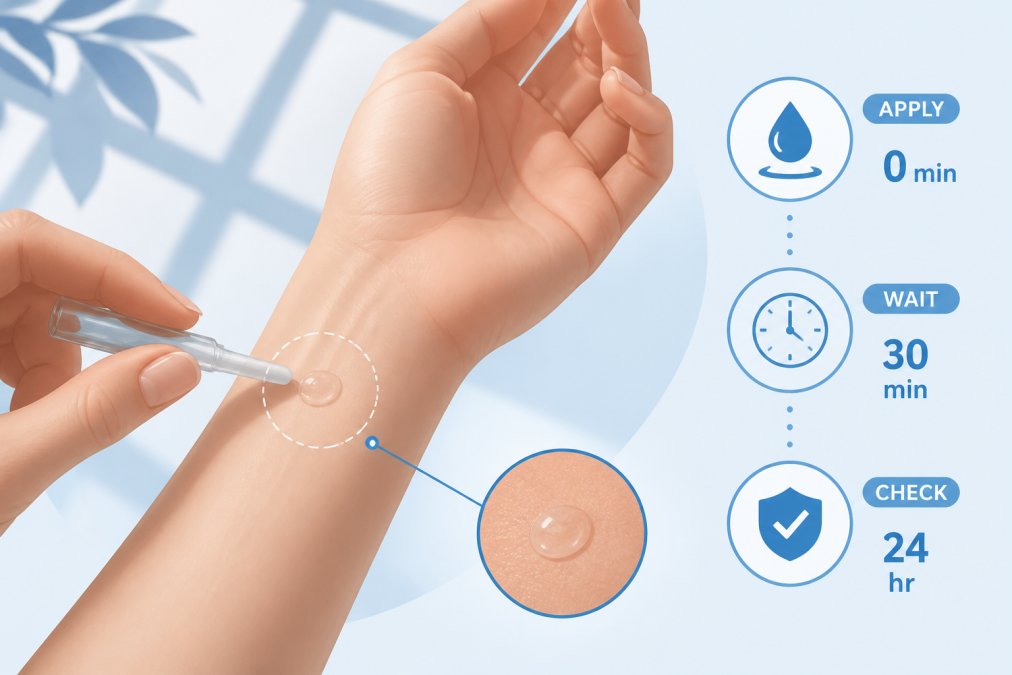
If no reaction appears after 24 hours, proceed to a full-day test. Apply the fragrance to your pulse points using your normal application method and wear it throughout the day. Continue monitoring for delayed reactions. Some sensitivities manifest 6-8 hours into wear.
Keep detailed records of your patch tests. Note the fragrance name, date, location tested, and any reactions. Over time, you'll identify patterns, certain ingredients trigger reactions while others don't. This data becomes invaluable for selecting fragrances that work for your specific skin chemistry.
Ingredients to Avoid in Perfumes for Reactive Skin
Synthetic musks are common irritants in fragrances designed for sensitive skin. These compounds were developed to mimic natural musk but often trigger contact dermatitis. Look for fragrances labeled "musk-free" or formulated with natural musk alternatives like ambrette seed.
Phthalates (diethyl phthalate, or DEP) extend fragrance longevity but are known sensitizers. The fragrance industry uses them widely, but many niche brands have eliminated them entirely. Check ingredient lists or contact the brand directly to confirm phthalate-free formulations.
Certain essential oils, despite being "natural," cause reactions in sensitive skin. Cinnamon, citrus oils in high concentrations, and some floral oils like ylang-ylang can trigger irritation. This doesn't mean all natural fragrances are safe, individual sensitivities vary significantly.
Parabens (methylparaben, propylparaben, butylparaben) are preservatives that prevent microbial growth but commonly trigger allergic contact dermatitis. Many modern fragrances use paraben-free preservative systems, making them safer for reactive skin.
Alcohol (especially denatured alcohol) strips the skin barrier and causes irritation. As mentioned earlier, alcohol-free formulations eliminate this issue entirely. When reviewing fragrances, check whether the carrier is oil-based or alcohol-based.
Fragrance compounds labeled only as "fragrance" or "parfum" hide dozens of undisclosed ingredients. This lack of transparency makes it impossible to identify potential irritants. Seek brands that list specific fragrance components or provide complete ingredient transparency.
Application Tips for Maximum Longevity Without Irritation
Strategic application transforms how long a fragrance lasts while protecting your skin from irritation. The key is using less product applied more thoughtfully.
Apply fragrance to pulse points on your body rather than your face or neck. Your inner elbows, wrists, and upper chest generate consistent heat that helps diffuse scent without concentrating fragrance near sensitive facial skin. This distributes the scent throughout your day without overwhelming any single area.
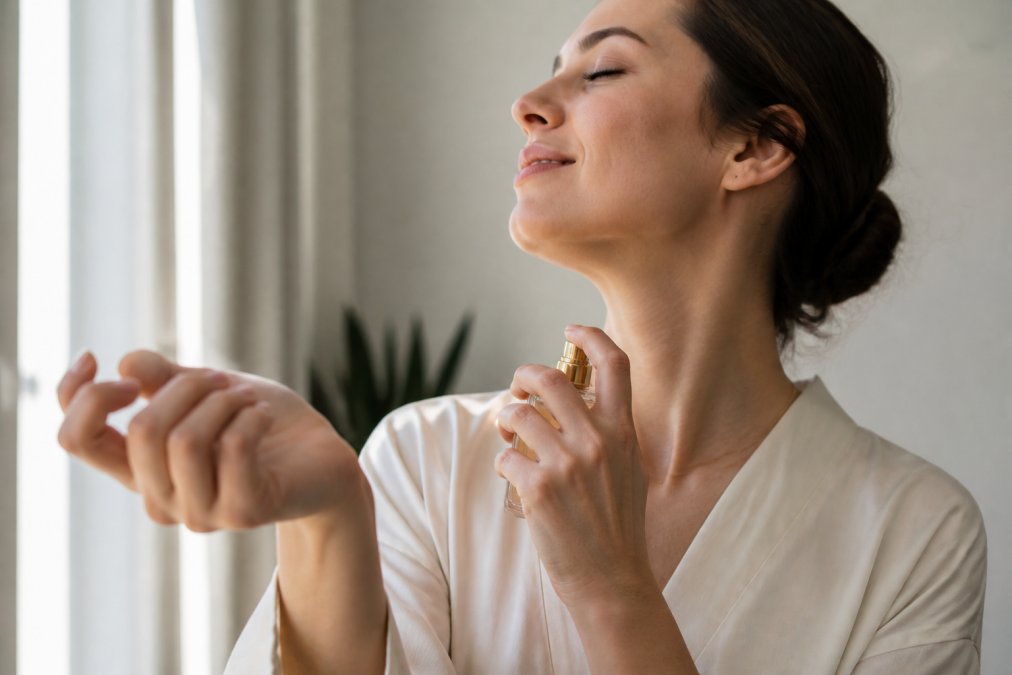
Use the "one-spray rule" per location. A single spray provides enough fragrance for 8-12 hours of wear without oversaturating your skin. Resist the temptation to add more, additional applications increase irritation risk without significantly extending longevity.
Apply fragrance to dry skin, never immediately after showering when your skin is still damp. Water dilutes fragrance and reduces adhesion, cutting longevity in half. Wait 10-15 minutes after showering to allow your skin to dry completely.
Don't rub your wrists together after applying fragrance. This friction breaks down fragrance molecules and accelerates evaporation, reducing longevity by 30-40%. Instead, let the fragrance dry naturally on your skin.
Apply fragrance to clothing as a secondary strategy. Spray a light mist on cotton clothing (avoid silk or delicate fabrics). Fabric holds scent significantly longer than skin, often 12-16 hours, while reducing direct skin contact by 70-80%.
Reapply strategically rather than heavily. A single touch-up spray to your inner elbows at midday extends longevity without accumulating fragrance on your skin. This approach maintains scent presence while minimizing irritation risk.
Fragrance-Free Alternatives and Complementary Options
For people with severe skin sensitivity, fragrance-free alternatives provide scent experiences without triggering reactions. These options include unscented body lotions infused with essential oils, solid perfumes with minimal carriers, and fragrance-free deodorants formulated with natural scent compounds.
Solid perfumes offer controlled application and extended longevity. These wax-based products contain higher fragrance concentrations than liquid perfumes but require less product per application. Because they're applied directly from a tin, you control the exact amount touching your skin.
Fragrance-free body mists serve as layering tools for sensitive skin. These lightweight products contain minimal fragrance concentration (1-3%) and work beautifully as complementary scents. Layer a body mist over your primary fragrance to extend longevity without adding irritation risk.
Natural fragrance oils represent another alternative. These concentrated botanical extracts offer authentic scent profiles without synthetic compounds. However, not all natural oils are hypoallergenic, individual sensitivities vary. Patch test thoroughly before full application.
Scent-layering with unscented products is a game-changer for sensitive skin. Apply an unscented lotion, follow with a light fragrance spray, then add a complementary body mist. This creates depth and longevity while distributing fragrance across multiple products rather than concentrating it on your skin.
Consider fragrance-free alternatives for specific occasions. If you're attending an event where extended wear time matters, use a solid perfume or fragrance-free body mist layered with a light spray. This approach maximizes longevity while minimizing irritation risk.
Finding a long lasting perfume for sensitive skin requires patience and strategic testing, but the payoff is worth it. The right fragrance enhances your day without compromising your skin's health or comfort.
Roma Parfum's approach to fragrance formulation prioritizes both longevity and skin safety. With 40% oil concentration and hand-extracted botanical ingredients, their fragrances are designed to last 36 hours while remaining gentle on reactive skin. Explore their collection and discover how artisan perfumery can work with your skin chemistry rather than against it. Get on the Roma Parfum mailing list to learn about new releases specifically formulated for sensitive skin.
Frequently Asked Questions
What makes long-lasting perfume work better on sensitive skin?
Long-lasting perfume for sensitive skin typically uses higher fragrance oil concentration (40% or more) combined with hypoallergenic formulations that minimize irritants. Alcohol-free bases and botanical fixatives extend longevity while reducing redness and rash reactions. High-quality base notes and essential oils create lasting scent profiles without requiring harsh synthetic fragrance compounds that trigger contact dermatitis in reactive skin types.
Which ingredients should I avoid in perfume if I have sensitive skin?
Avoid synthetic fragrances with phthalates, parabens, and synthetic musks, which commonly cause allergic reactions. Alcohol-based formulations can damage your skin barrier and increase irritation. Skip fragrances with heavy volatile organic compounds and opt instead for products labeled phthalate-free and paraben-free. Essential oils should be diluted properly; undiluted oils can cause sensitization. Always check for dermatologist-tested certification before purchasing.
How do I test if a perfume will work for my sensitive skin?
Start with a patch test: apply a small amount to your inner wrist or behind your ear and wait 24-48 hours. Monitor for redness, itchiness, or rash. If no reaction occurs, apply to a pulse point and wear for a full day. This patch testing protocol helps identify contact dermatitis before full application. For high-concentration fragrances like eau de parfum, always patch test first regardless of skin type.
Can layering perfume with unscented products make it last longer without causing irritation?
Yes. Apply an unscented, non-comedogenic moisturizer to pulse points before applying perfume. This hydrates your skin barrier, allowing fragrance oils to bind longer while reducing irritation risk. Layering with fragrance-free alternatives like body oils or balms extends scent longevity by 8-12 hours without adding extra irritants. This technique works especially well with alcohol-free perfume formulations that already prioritize skin safety.
This article was written using GrandRanker