

Table of Contents
- What Is Scent Layering and Why It Matters
- Understanding Base, Heart, and Top Notes in Layering
- Fragrance Layering Combinations That Work
- Fragrance Family Compatibility and Harmonizing Scents
- Step-by-Step: How to Layer Perfumes Like a Pro
- How to Make Perfume Last Longer Through Strategic Layering
- Common Mistakes to Avoid When Layering Scents
- Conclusion
Last Updated: August 15, 2026
What Is Scent Layering and Why It Matters
Scent layering is the art of combining multiple fragrances strategically to create a unique, personalized olfactory profile that's greater than any single fragrance alone. Rather than wearing one perfume, you're intentionally stacking complementary scents to enhance projection, extend longevity, and craft a signature scent that reflects your personality. This practice has moved from niche fragrance enthusiast territory into mainstream luxury beauty.
At Roma Parfum, we've observed that the most compelling fragrances aren't always worn solo. When fragrance enthusiasts understand how to layer effectively, they unlock entirely new dimensions of their existing collection. A fragrance that feels one-dimensional on its own becomes complex and memorable when layered with complementary notes.
The real appeal lies in personalization. Your skin chemistry, body temperature, and the specific fragrances you own create an entirely unique combination that no one else can replicate. Understanding the science behind why certain fragrances work together separates effective layering from expensive mistakes.
Fragrance Foundation research on consumer scent preferences
Understanding Base, Heart, and Top Notes in Layering
Effective scent layering rests on understanding the three-part structure of any fragrance: base notes, heart notes, and top notes.
Top notes are the first impression, bright scents you smell immediately after application. Citrus, bergamot, and light fruity accords dominate this layer, vaporizing quickly in 5-15 minutes. When layering, top notes create the initial pop but fade fast, so they're never the foundation of a layering strategy.
Heart notes (also called middle notes) emerge as top notes fade and form the emotional core of a fragrance. Floral, spicy, and herbal accords live here, typically lasting 30 minutes to several hours. In scent layering, heart notes are your primary building blocks, they have enough staying power to influence the overall composition while remaining complex enough to harmonize with other fragrances.
Base notes provide the foundation and longevity. Woody, resinous, musky, and gourmand accords create the lasting impression, lingering 6-36 hours depending on concentration and skin chemistry. When layering, base notes act as the anchor, determining whether your combination feels cohesive or chaotic.
The interplay between these three layers is where scent layering becomes powerful. A fragrance with a citrus top note, floral heart, and woody base creates a completely different experience than one with the same notes in reverse order.

Fragrance Layering Combinations That Work
Not all fragrance layering combinations create harmony. The most reliable approach pairs fragrances from complementary families. A floral fragrance with a woody base naturally complements a woody fragrance with subtle floral heart notes, creating continuity rather than competition. Pairing two fragrances that share the same dominant note often results in overwhelming intensity or olfactory fatigue.
Gourmand fragrances (vanilla, caramel, dessert-like accords) layer exceptionally well with woody or musk-based fragrances, becoming grounded and sophisticated rather than cloying. Citrus fragrances work beautifully with light floral or herbal accords, creating fresh, energetic combinations. Resinous fragrances (incense, amber, oud) pair well with spicy or woody notes, creating depth and complexity.
The key principle: look for fragrances where one fragrance's weakness becomes another's strength. If one fragrance has excellent projection but weak longevity, layer it with a fragrance that lingers but projects softly.
Consider this practical example: a bright citrus fragrance applied first, followed by a woody fragrance with musk base notes. The citrus provides immediate sparkle and freshness. As it fades, the woody fragrance emerges, creating a sophisticated dry down that lasts for hours.
Fragrance Family Compatibility and Harmonizing Scents
Understanding fragrance families is essential to successful scent layering. The major families, citrus, floral, woody, spicy, gourmand, and resinous, each have distinct characteristics that determine how they interact when layered.
Citrus fragrances are bright, energetic, and ephemeral. They project strongly but fade quickly. When layering citrus fragrances, pair them with longer-lasting accords to extend their life. A citrus fragrance layered over an unscented base creates a clean foundation that amplifies the citrus without competing for attention.
Floral fragrances range from light and airy to heavy and intoxicating. Light florals work well with citrus or herbal accords. Heavy florals pair better with woody or resinous bases. Avoid floral overload, two heavy florals layered together often create a muddy, overwhelming scent.
Woody fragrances serve as excellent anchors in layering. Sandalwood, cedar, and vetiver provide grounding without dominating, harmonizing with nearly every other family. A woody fragrance applied as your base layer creates a sophisticated foundation that allows other fragrances to shine.
Spicy fragrances (cinnamon, cardamom, pepper) add complexity and warmth, working exceptionally well with woody fragrances and gourmand accords. Avoid layering multiple spicy fragrances, as the effect becomes sharp and one-dimensional.
Gourmand fragrances (vanilla, caramel, tonka bean) create warmth and comfort, layering beautifully with woody, musk, or resinous fragrances. Avoid pairing gourmand fragrances with light citrus or fresh florals, as the contrast often feels jarring.
Resinous fragrances (incense, amber, oud) are intense and long-lasting. Pair them with fragrances that can hold their own, woody accords, spicy notes, or other resinous fragrances. A resinous fragrance layered over a lighter fragrance will quickly overwhelm it.
Step-by-Step: How to Layer Perfumes Like a Pro
Effective scent layering follows a deliberate sequence. The order, timing, and placement of each fragrance dramatically affects the final result.
Prepare Your Skin and Base Layer
Start with clean, moisturized skin. Fragrance clings better to hydrated skin and lasts significantly longer. Apply an unscented base lotion to pulse points: wrists, inner elbows, behind ears, and the base of the throat. This neutral foundation prevents fragrance from clashing with natural skin oils and provides a consistent surface for layering.
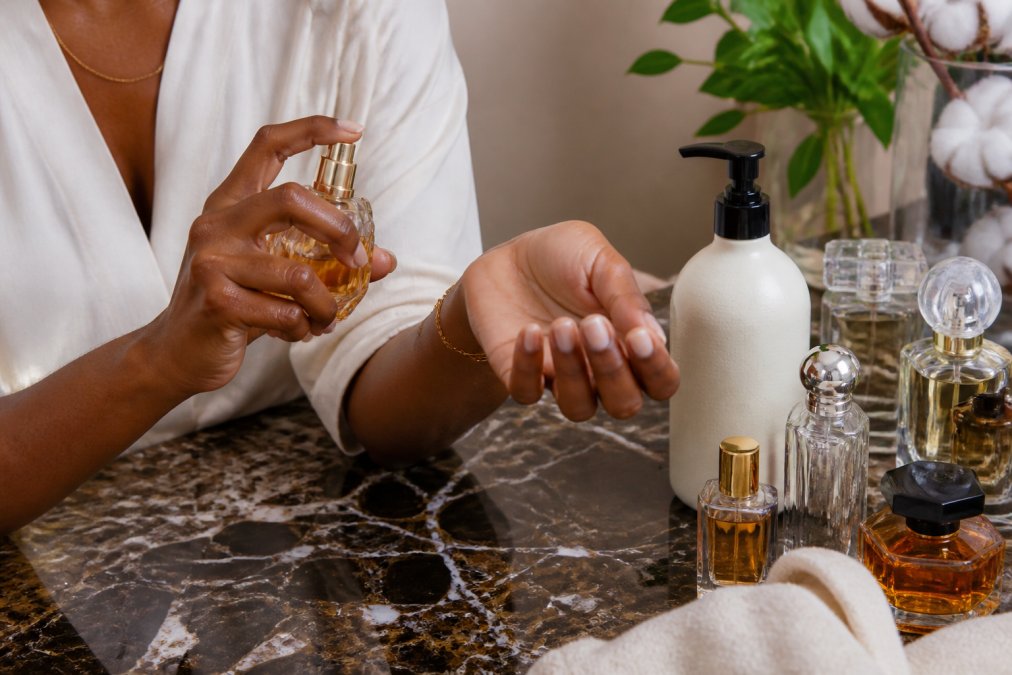
Allow the base lotion to fully absorb, typically 2-3 minutes, before applying fragrance.
Apply Heart Notes and Build Projection
Apply your primary fragrance, typically a heart note-forward composition, to pulse points using 2-3 spritzes. These areas generate heat, which amplifies fragrance projection and longevity. Wait 3-5 minutes before applying the second fragrance, allowing the first to settle and begin its evolution.
Apply your secondary fragrance, ideally one that complements the heart notes of your primary fragrance, to one wrist or inner elbow using 1-2 spritzes. This second layer adds complexity and extends overall longevity without overwhelming the primary fragrance.
The key principle: less is more in layering. Each additional fragrance should enhance, not dominate.
Top Notes and Final Finishing Touches
If desired, apply a final top note fragrance, something bright and energetic, to one pulse point. This creates a three-layer composition with a lasting base, complex heart, and bright top.
Wait 5-10 minutes before evaluating the full combination. The fragrances need time to interact and settle into their final form.
How to Make Perfume Last Longer Through Strategic Layering
One of the primary reasons fragrance enthusiasts embrace scent layering is longevity. A fragrance that fades by lunch can become an all-day scent through strategic layering.
Start with fragrances featuring strong base notes. Woody, resinous, musky, and gourmand accords have inherently better staying power than citrus or light floral notes. Roma Parfum's fragrances, formulated with 40% oil concentration and hand-extracted rare botanicals, provide the base longevity that makes scent layering effective.
Layer lighter fragrances over heavier ones. A bright citrus fragrance applied over a woody base will feel fresh and energetic while benefiting from the woody fragrance's longevity.
Apply fragrances to pulse points and areas of friction: wrists, inner elbows, behind ears, and the base of the throat. These areas generate heat that amplifies fragrance projection and longevity.
An unscented base lotion applied to pulse points before fragrance creates a stable foundation that extends longevity by 2-4 hours. Reapply strategically around midday to refresh the combination and maintain consistent scent intensity throughout the day.
Common Mistakes to Avoid When Layering Scents
Layering fragrances with conflicting dominant notes creates muddy scents. Before layering, identify the dominant note in each fragrance and ensure they complement rather than compete.
Applying too much fragrance is the most common mistake. More fragrance doesn't mean better results, it means overwhelming intensity and rapid olfactory fatigue. Restraint creates a more sophisticated, wearable result.
Ignoring skin chemistry leads to disappointing combinations. Test layering strategies on your own skin before committing to them regularly.
Layering fragrances without considering fragrance families creates chaotic, incoherent scents. Understanding which families harmonize prevents these mismatches.
Applying all fragrances simultaneously prevents the layering effect from working. Each fragrance needs time to settle before the next layer is applied.
Not accounting for longevity differences results in unbalanced combinations that fall apart as the day progresses. Match fragrance longevity expectations when building combinations.
Effective scent layering techniques transform how you experience your fragrance collection. Rather than viewing each fragrance as a standalone option, you begin seeing them as components of a larger olfactory palette.
Roma Parfum's luxury fragrances, crafted with extreme longevity and complex olfactory profiles, are designed specifically for sophisticated layering. With 40% oil concentration and hand-extracted rare botanicals, they provide the staying power and depth that make scent layering techniques truly effective. Understanding fragrance concentration and its impact on longevity When you start layering with fragrances formulated for complexity, you unlock entirely new dimensions of your collection. Get on the Roma Parfum mailing list to discover new fragrance combinations and layering strategies from our community of fragrance creators and enthusiasts.
Frequently Asked Questions
What are the best fragrance layering combinations for 2026?
The most effective combinations pair complementary fragrance families: citrus with woody bases for fresh sophistication, floral heart notes with resinous base notes for depth, or gourmand accords with musk for warmth. The key is ensuring your top notes, heart notes, and base notes work together without creating a muddy scent. Start with an unscented base lotion, add your base note fragrance first, then layer heart notes at pulse points, finishing with citrus or fresh top notes. Test combinations on skin, your unique skin chemistry affects how scents harmonize together.
How long does a layered scent last compared to a single perfume?
Strategic scent layering can extend longevity significantly beyond a single fragrance. When you layer properly, the base notes establish lasting sillage while heart notes provide mid-day projection and top notes refresh the olfactory profile. High-concentration fragrances like extrait de parfum (40% oil concentration) layered with complementary ancillary products, body lotions, shower gels, or unscented bases, can maintain noticeable projection for 12-16 hours or longer. The molecular composition of each layer creates sustained fragrance intensity as earlier notes dry down and later ones emerge.
Can you layer different fragrance families without them clashing?
Yes, when you understand fragrance family compatibility. Woody fragrances pair well with florals, citrus, or spicy notes. Gourmand scents harmonize with resinous or musk-based fragrances. Floral families work across most combinations if the florals share similar olfactory profiles. The risk of a muddy scent increases when you layer too many competing families at once. Limit yourself to 2-3 fragrances maximum, ensure they share at least one common note family, and always test on skin first. Your skin chemistry influences how well different families blend together.
What's the best order to apply scented body products when layering?
Start with an unscented moisturizer or base lotion on damp skin, this creates a longer-lasting foundation for fragrance molecules. Apply your base note fragrance first (typically woody, resinous, or musk scents) to pulse points: wrists, neck, behind ears, and inner elbows. Layer your heart note fragrance next, applying to the same pulse points or slightly higher on the neck. Finish with top notes (citrus or fresh accords) applied last, as they vaporize quickly and provide immediate olfactory impact. This order ensures proper dry down and sustained projection throughout the day.
This article was written using GrandRanker